Brightening Bondi’s Coastal Homes: Skylight Solutions for Sea Breezes
1. Introduction
Bondi, an iconic suburb in Sydney, New South Wales, is renowned for its stunning coastline, vibrant beach culture, and laid-back lifestyle. Coastal homes in this area enjoy spectacular ocean views but often struggle with salt-laden air, strong sea breezes, and harsh sunlight. Installing skylights in Bondi’s coastal properties can elevate indoor comfort, reduce reliance on artificial lighting, and capture the unique seaside ambience. This article delves into coastal-specific skylight solutions, covering design strategies, salt-air considerations, building code compliance, and real-life tips to ensure Bondi homeowners achieve the perfect blend of natural light and resilience against the elements.
2. Understanding Bondi’s Coastal Climate and Sea Breezes
- Salt-Laden Air:
- Corrosion Risks: Coastal winds carry salt and moisture that can corrode metal components of skylights. Hence, selecting corrosion-resistant or specially coated frames (e.g., powder-coated aluminium) is vital.
- Regular Maintenance: Skylight frames, flashing, and seals need periodic checks to ensure longevity amidst the saline environment.
- Strong Sea Breezes:
- Wind Load Considerations: Skylights must withstand significant wind loads, especially on higher storeys or rooftops exposed to the ocean. Bondi’s afternoon sea breezes can be robust.
- Ventilation Benefits: Conversely, those breezes can be harnessed by operable skylights, promoting natural airflow and reducing indoor humidity.
- Beachside Temperatures and Humidity:
- Mild Winters, Warm Summers: Bondi’s coastal climate rarely plunges into extreme cold, but summer heat can intensify indoors without proper ventilation. Skylights with Low-E coatings and insulated frames help moderate indoor temperatures.
- Humidity Management: Skylights that open can alleviate humidity in kitchens, bathrooms, or laundries, mitigating mould growth.
3. Choosing the Right Skylight for Bondi Homes
A. Corrosion-Resistant Frames
- Powder-Coated Aluminium or Stainless Steel: These materials endure salt-air environments better than standard steel or uncoated aluminium.
- Marine-Grade Finishes: Where possible, opt for finishes rated for coastal corrosion resistance.
B. Double or Triple Glazing
- Insulation Against Heat: Multi-glazed skylights minimise solar heat gain, useful in sun-drenched Bondi summers.
- Reduced Noise: Double glazing also dampens external noise, helpful when sea winds intensify or during busy beach seasons.
C. Operable Skylights
- Ventilation Advantage: Controlling air circulation can significantly lower indoor heat or humidity, aligning well with Bondi’s breezy climate.
- Smart Controls: Integrate with automated systems to close skylights if wind speeds become excessive, or if it starts raining unexpectedly.
D. Tubular Skylights
- Space-Saving Option: Suited for narrow corridors or small bathrooms where a traditional skylight might not fit.
- Minimal Roof Penetration: Reduces risk of leaks and speeds up installation—particularly beneficial if Bondi’s frequent coastal weather changes limit extended roof work.
4. Design Strategies for Sea Breeze Optimisation
- Roof Placement and Orientation:
- Northern vs. Eastern Exposure: In Bondi, placing skylights where they can receive gentler morning sunlight from the east may mitigate excessive heat from midday sun.
- Away from Harsh Gusts: If possible, situate skylights in roof sections less directly hit by onshore winds.
- Automated Shading or Blinds:
- Heat Control: Summer afternoons can become quite warm; internal or external blinds integrated with skylights reduce glare and manage indoor temperatures.
- Rain Sensors: Skylights in Bondi’s coastal environment should have sensors to automatically close during sudden showers, maintaining interior dryness.
- Reflective Surfaces Indoors:
- Light Amplification: Using light-coloured walls, mirrors, and reflective décor helps distribute incoming sunlight deeper into living spaces.
- Beach-Inspired Aesthetics: Embrace bright, coastal-themed interiors that accentuate the natural light from above.
5. Compliance with NSW Building Codes
A. National Construction Code (NCC)
- Energy Efficiency Requirements: Skylights must comply with U-value and Solar Heat Gain Coefficient (SHGC) standards to maintain energy efficiency in coastal homes.
- Structural Integrity: Skylights should handle Bondi’s potential wind loads and salt-laden air exposure.
B. AS 1288—Glass in Buildings
- Overhead Glazing Safety: Skylight glass must be toughened or laminated, ensuring occupant safety if breakage occurs.
- Installation Guidelines: Properly sealed and flashed to avoid moisture penetration—a critical factor in coastal climates.
C. AS/NZS 4284—Testing of Building Facades
- Wind-Driven Rain Standards: Skylights must withstand coastal gusts and heavy rain typical of beachside storms.
- Performance Testing: Ensures longevity and weatherproofing, vital for a comfortable, leak-free interior.
D. Local Council Regulations
- Heritage Overlays: Certain Bondi neighbourhoods may have heritage controls—seek council approval if modifications alter the home’s street-facing façade.
- Permit Requirements: If major structural changes are needed, consult VBA-registered (or equivalent NSW-registered) professionals to confirm building approval processes.
6. FAQs: Skylights for Bondi’s Coastal Environment
- How do I protect skylights from salt corrosion in Bondi?
- Choose marine-grade or powder-coated frames, and schedule regular cleaning to remove salt residue.
- Do I need a building permit to install a skylight in Bondi?
- Minor installations often don’t require extensive permits, but it varies by council. Check local regulations or work with a professional installer.
- Will skylights make my Bondi home too hot in summer?
- High-quality skylights with double glazing, Low-E coatings, and ventilation features help regulate indoor temperatures, reducing overheating.
- Are tubular skylights effective for small spaces near the coast?
- Absolutely. Tubular skylights channel sunlight through a small roof opening, ideal for corridors or bathrooms where full skylights might be impractical.
- What maintenance do skylights in Bondi need?
- Primarily removing salt buildup from frames and seals, plus periodic checks to ensure flashing and sealants remain intact.
7. Real-Life Example: Skylight Installation in a Bondi Beach Cottage
Scenario:
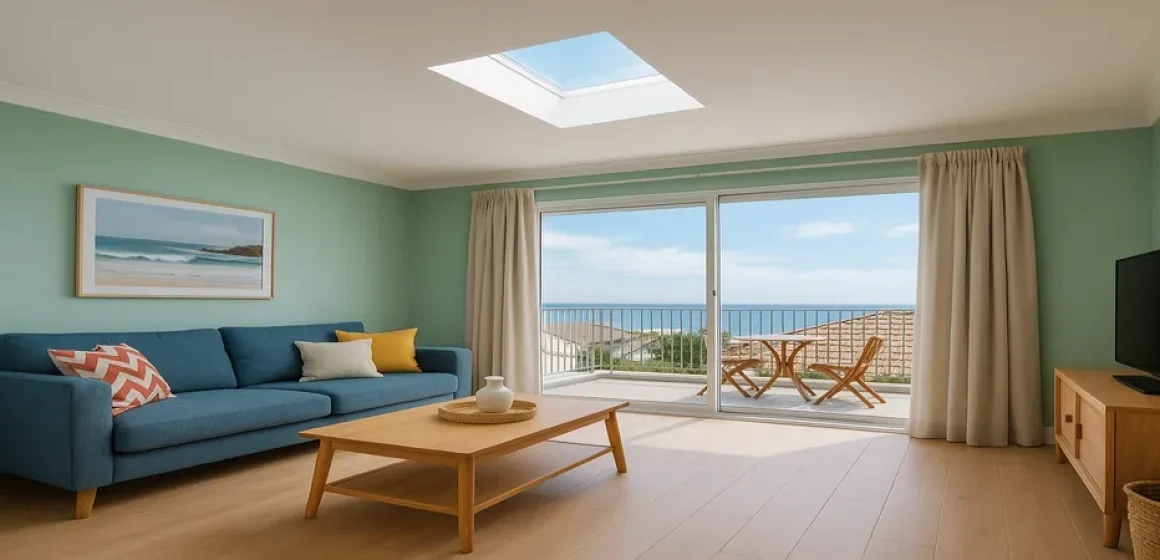
A renovated semi-detached beach cottage near Bondi Beach desired more natural light in its living room and kitchen without increasing utility bills or compromising the coastal façade.
Solution:
- Installed two fixed skylights with powder-coated aluminium frames and double-glazed Low-E glass to resist salt-induced corrosion and manage solar heat.
- Positioned skylights on the east-facing slope of the roof to capture gentle morning sunlight while minimising midday glare.
- Added motorised internal blinds that close automatically during peak sun hours in summer to prevent overheating.
Outcome:
- Achieved a 20% reduction in daytime lighting costs by relying on abundant natural light for the living area.
- Interior remained cooler in summer, thanks to Low-E coatings and blinds controlling heat gain.
- Preserved the cottage’s charming street-facing exterior, as skylights were placed away from the visible façade line.
(Energy savings are illustrative; actual results vary based on home conditions and usage patterns.)
8. Conclusion
For Bondi homeowners, skylights provide an unparalleled opportunity to capture sea breezes and natural daylight, creating interiors that embody the laid-back beach lifestyle. By selecting corrosion-resistant materials, energy-efficient glazing, and salt-air-appropriate finishes, you can enjoy bright, inviting spaces without fear of premature wear or leaks. Compliance with NSW building codes ensures a safe, long-lasting installation, while thoughtful design strategies—from orientation to operable features—help you harness Bondi’s coastal environment effectively.
Action Steps: Installing Skylights in Bondi’s Coastal Homes
- Assess Your Home’s Needs
- Determine which rooms or areas benefit most from natural light, factoring in coastal humidity or salty winds.
- Choose Corrosion-Resistant Materials
- Opt for marine-grade or powder-coated aluminium frames, plus double or triple glazing to handle sea breezes.
- Engage Professional Installers
- Seek NSW-registered professionals well-versed in coastal roof conditions and local council requirements.
- Check Building Codes and Permits
- Confirm compliance with NCC, AS 1288, AS/NZS 4284, and any local council overlays—particularly if heritage overlays apply.
- Plan for Maintenance
- Schedule regular cleaning to remove salt deposits, and inspect seals and flashings to prevent corrosion or leaks.
- Integrate Smart Features (Optional)
- Automate skylight blinds or openings with rain sensors and smart controls to manage temperature and weather changes efficiently.
By following these steps, you can enhance your Bondi home’s natural lighting and ventilation, transforming it into a light-filled oasis that celebrates the beauty of coastal living.