Transform Your Melbourne Home Office with Skylights: A Light-Filled Perspective
Working from home has become increasingly common in Melbourne, and designing a comfortable, productive home office is now a top priority for many. One proven way to elevate your workspace is through skylights, which bring natural light, fresh air, and an overall sense of wellbeing—ideal for those long Zoom calls or creative sessions. This article explores how skylights can transform your Melbourne home office, covering building codes, design tips, and energy-saving strategies for an effective, light-filled environment.
1. The Impact of Natural Light on Home Office Productivity
- Boosted Mood and Energy
- Exposure to daylight can help regulate circadian rhythms, potentially improving alertness and reducing eyestrain compared to artificial lighting.
- A bright environment often fosters a positive mindset, helpful in sustaining focus throughout the workday.
- Reduced Eye Strain
- Properly placed skylights deliver diffused, glare-free daylight, minimising the need for overhead lights that can create shadows or reflections.
- Ergonomic lighting helps reduce fatigue, especially for extended screen time.
- Connection to the Outdoors
- Even a framed view of the sky can make a workspace feel more open, fighting the sense of confinement that can come from working in a windowless or closed-off room.
2. Understanding Melbourne’s Climate for Skylight Design
- Cool Winters, Mild Summers
- Melbourne’s winter months can be chilly; insulated skylights help retain heat.
- During mild summers, ventilated skylights or models with blinds can manage any excess heat gain.
- Variable Weather
- Sudden rain, gusty winds, and the famous “four seasons in one day” call for robust flashing and sealing to keep your workspace leak-free.
- Year-Round Daylight Needs
- Shorter daylight hours in winter increase reliance on artificial lighting—making a well-placed skylight an ideal solution for boosting natural brightness.
3. Skylight Options for Your Home Office
|
Skylight Type |
Best Use Case |
Pros |
Cons |
|
Dedicated office space with stable lighting needs |
Simple, fewer moving parts, often cost-effective |
No ventilation; rely on windows or AC for airflow |
|
|
Office areas prone to heat buildup or humidity |
Adds fresh air, helps regulate temperature, reduces stale air |
More complex mechanisms, slightly higher cost |
|
|
Small or narrow offices lacking direct roof access |
Minimal roof penetration, highly diffused natural light |
Limited lighting spread, typically no ventilation |
|
|
Offices in attic conversions or pitched-roof spaces |
Dramatic daylight, can follow roof lines, aesthetic appeal |
May require custom flashing, specialised installation |
(All installations should comply with AS 1288 for overhead glazing safety and the National Construction Code (NCC) for energy efficiency.)
4. Compliance with Victorian Building Requirements
- National Construction Code (NCC)
- Addresses energy efficiency, including U-value and Solar Heat Gain Coefficient (SHGC) for skylights.
- Encourages designs that reduce reliance on artificial lighting while maintaining indoor comfort.
- AS 1288—Glass in Buildings
- Overhead glazing (like skylights) must be toughened or laminated for safety.
- Ensures protection if anything falls onto the skylight or if it breaks unexpectedly.
- Local Council Guidelines
- In inner-suburb Melbourne, some homes may be under heritage or character overlays. Large or highly visible roof modifications might require council approval.
- Seek advice from a VBA-registered builder or a planning officer at your local council to ensure compliance.
- Bushfire or Other Overlays
- If your office roof faces a bushfire-prone or special environmental overlay, additional materials or ember-proof sealing may be required (referencing AS 3959 if bushfire risk applies).
5. Design Tips to Optimise a Skylight-Lit Home Office
- Consider Office Layout
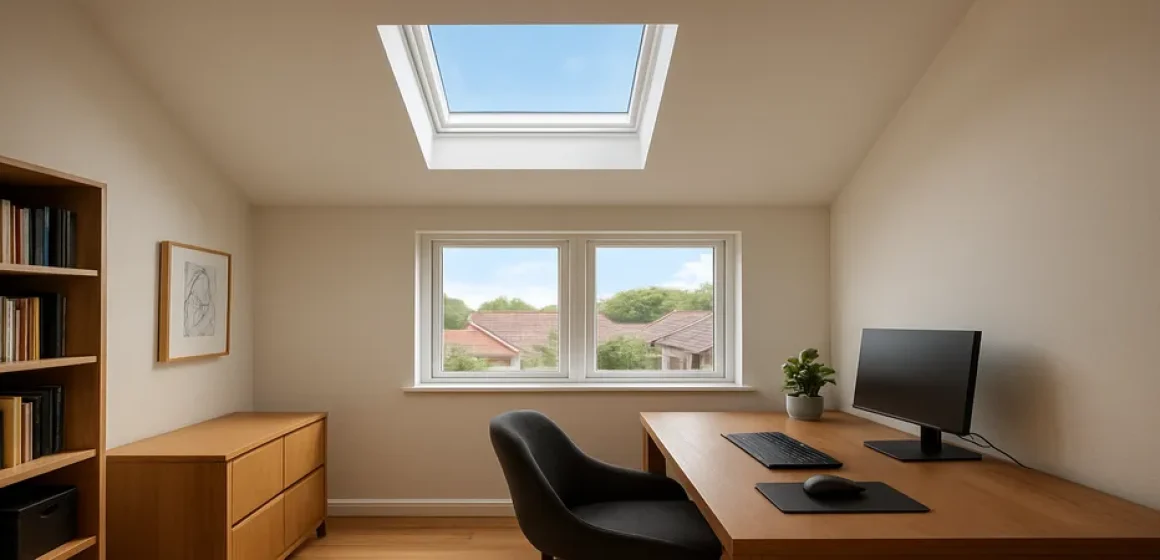
- Place the skylight above or near your desk area to maximise daylight on work surfaces without direct glare on computer screens.
- Use internal blinds or shades for adjusting light levels during bright midday hours.
- Angle and Orientation
- Combining Skylights with Artificial Lighting
- A layered lighting approach ensures consistent illumination, especially on overcast days.
- Dimmable LED lamps let you balance natural and artificial light for precise brightness control.
- Ventilation and Airflow
- Operable skylights can expel hot air or bring in cool breezes—helpful for extended work sessions in a closed room.
- In winter, keep them sealed and rely on good insulation to maintain warmth.
- Sound Insulation
- If outside noise is a concern (like traffic or flight paths), consider acoustic glazing or double-glazed units.
- Minimises distractions while preserving natural light benefits.
6. FAQs: Melbourne Home Office Skylights
- Will a skylight make my home office too hot in summer?
- Not necessarily. Ventilated or tinted skylights, plus internal blinds, mitigate excessive heat. Melbourne’s summers can be warm, but well-chosen glazing reduces heat gain.
- Do I need a permit for skylights in my home office?
- Minor works often don’t require a permit unless major structural changes or heritage overlays apply. Always check with local council if unsure.
- Are tubular skylights effective for small offices?
- Yes. Tubular (sun tunnel) skylights can illuminate tight or windowless spaces, though they won’t provide ventilation. Consider a separate vent or window for airflow.
- How do I prevent glare on my computer screen?
- Aim to place the skylight at an angle that avoids direct sun on screens. Use adjustable blinds or choose frosted/Low-E glass to diffuse the light.
- What if my roof is heavily shaded by neighbouring buildings?
- Skylights might still capture overhead light, but consider if tree cover or taller structures significantly block sun. A tubular skylight may gather more light if direct overhead sunlight is limited.
7. Conclusion
By introducing natural daylight and optional fresh air, skylights can have a remarkable impact on your Melbourne home office—helping you stay energised, comfortable, and productive throughout the workday. With well-planned design, code-compliant installations, and attention to thermal performance, you’ll strike the perfect balance between year-round comfort and an optimally lit workspace.
Action Steps: Brighten Your Home Office
- Assess Your Roof & Office Layout
- Identify where daylight is most needed, consider roof pitch/orientation, and note any heritage constraints.
- Choose the Right Skylight Features
- Insulated double glazing, ventilation options, and light control (blinds or tints) to align with Melbourne’s variable climate.
- Consult Professionals
- VBA-registered installers or licensed builders ensure correct flashing, sealing, and compliance with NCC standards.
- Maintenance Check
- Keep skylights clean, check seals periodically, and ensure smooth operation if they’re operable.
- Regularly remove debris (leaves, dirt) from roof areas to avoid leaks.
- Balance Natural & Artificial Lighting
- Combine skylights with dimmable LED solutions for an ergonomic environment that’s easy on the eyes during any weather.
By harnessing the power of daylight, your Melbourne home office can become a productive haven—inviting, bright, and perfectly tailored to your working needs without sacrificing comfort or code compliance.